
You’ve done the research, chosen your layout, and started thinking about countertops. The last thing you want is a stop-work order three weeks into construction because a permit was missed. It happens more often than most contractors will admit, and it almost always costs far more to fix than it would have cost to handle upfront.
The permit landscape for outdoor kitchens in Ontario isn’t complicated once you understand what triggers what. A freestanding grill on an existing patio is usually fine without paperwork. The moment you run gas, add electrical circuits, connect plumbing, or build a permanent structure, you’re in permit territory. Most custom outdoor kitchens involve at least one of those things, and premium builds typically involve all four.
Building regulations also vary by location. A GTA homeowner with a standard suburban lot faces a different set of constraints than a waterfront property owner in Muskoka, Haliburton, or the Kawarthas.
This guide covers both, along with the utility and structural requirements that apply province-wide.
The 10-square-metre rule
The Ontario Building Code requires a building permit for any detached accessory structure that exceeds 10 square metres, which is roughly 108 square feet. For outdoor kitchens, this threshold is easier to reach than most people expect.
If you’re planning an expansive L-shaped or U-shaped layout under a custom pavilion or permanent roof structure, you’ll exceed this limit. What surprises many clients is that even a modest cabinetry footprint can trigger the requirement when a covered overhead structure is part of the plan. This is because the roof itself counts toward the threshold, not just the kitchen below it.
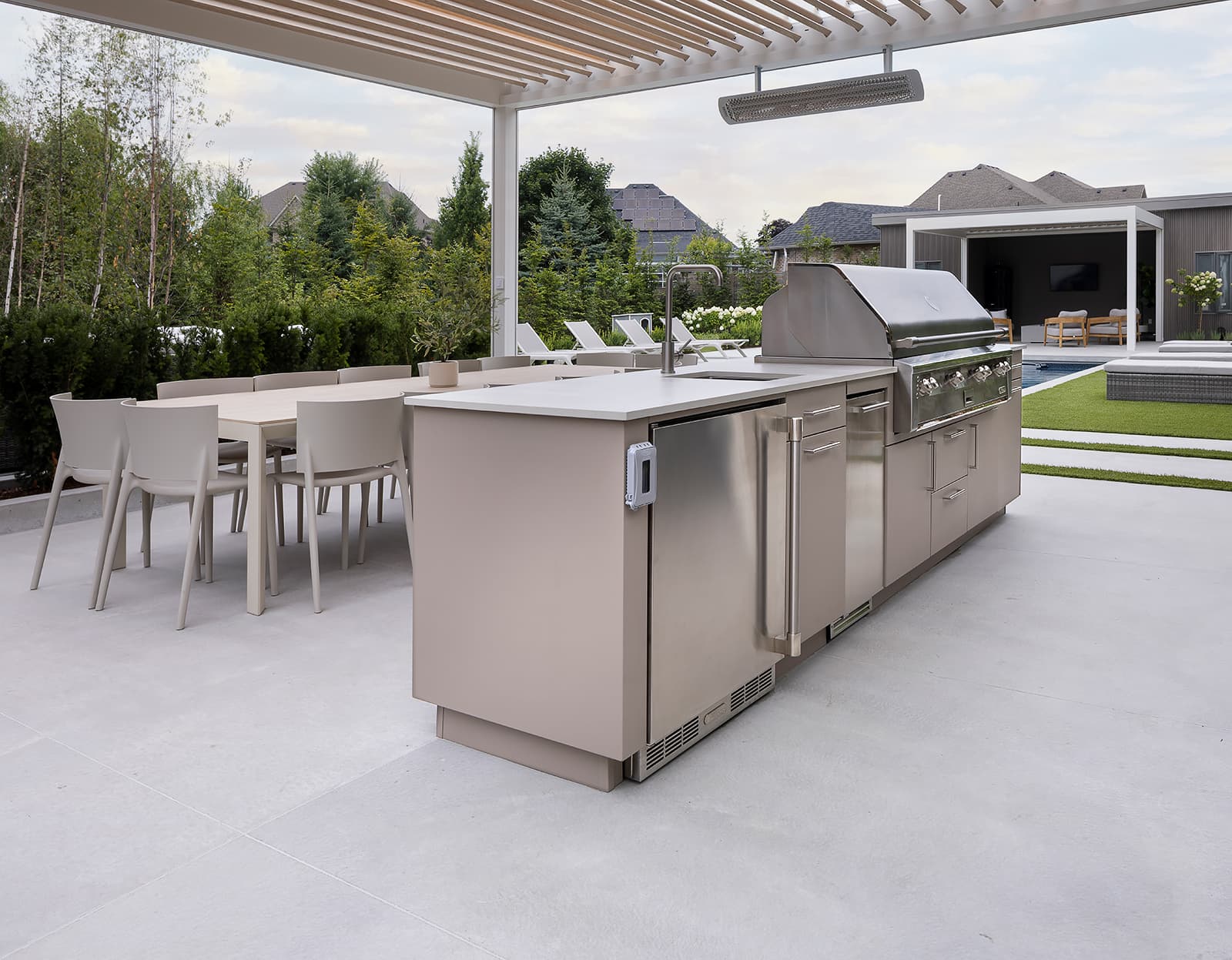
An open-air pergola with a slatted or open roof is treated differently in many municipalities, but a solid or semi-solid roof structure almost universally triggers a permit regardless of size. If coverage is part of your design vision, plan for the permit process from day one.
Zoning bylaws and setback requirements
Every municipality in Ontario enforces zoning bylaws that govern how close a permanent structure can sit to your property lines. These are called setbacks, and they vary significantly from one city to the next.
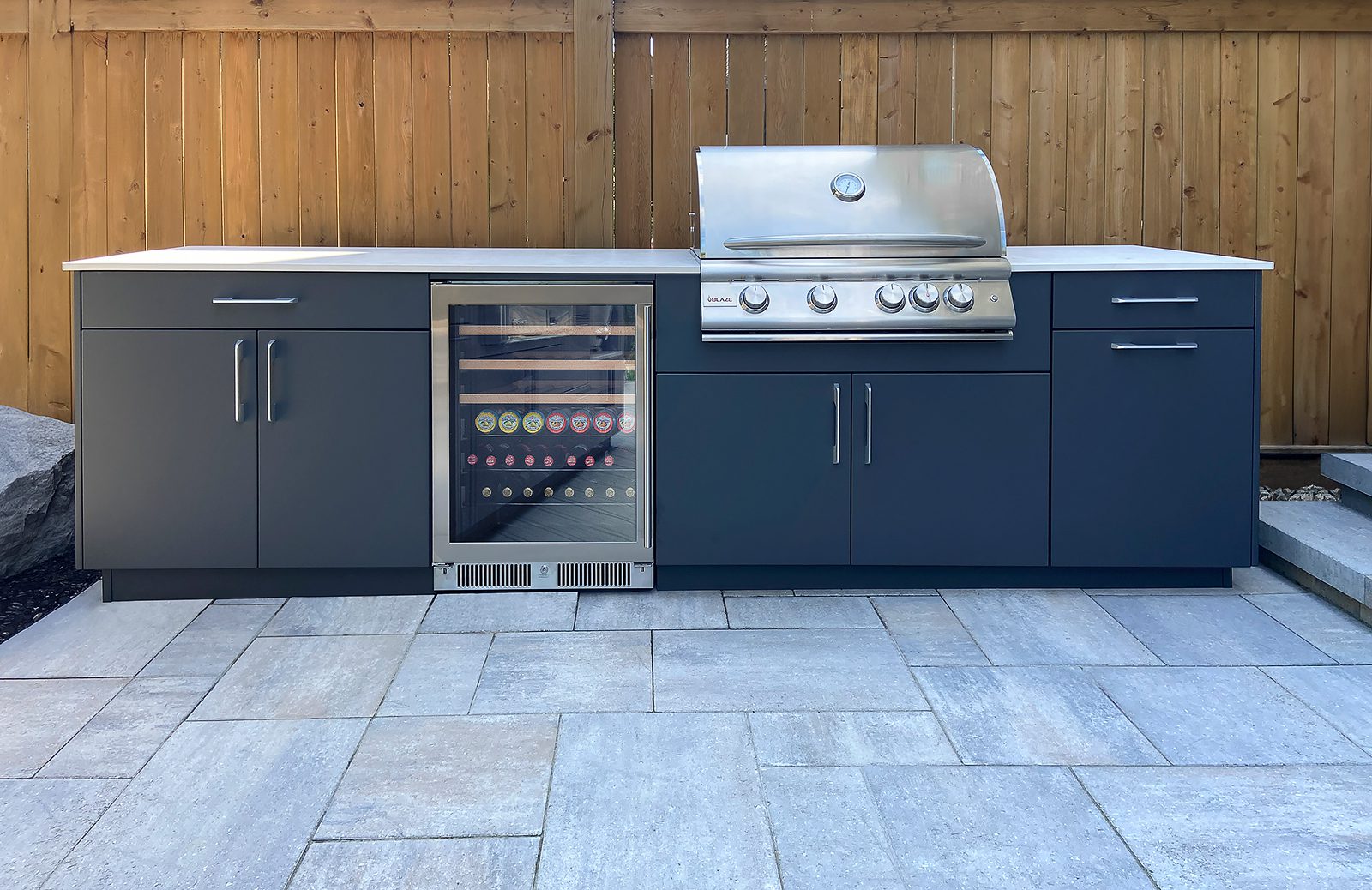
Toronto, Mississauga, and Vaughan each maintain their own setback rules for structures that involve open flames. A high-BTU cooking zone cannot be placed directly against a neighbor’s wood fence or property line. Beyond setbacks, municipalities also enforce maximum lot coverage allowances. The combined footprint of your home, deck, pool, and any new outdoor structures cannot exceed a defined percentage of your total lot area.
A project that clears every other hurdle can still be stopped by a setback violation discovered late in the process. Checking your zoning bylaw at the outset isn’t a formality. It’s the foundation of your project plan.
Our design consultants provide precise technical drawings showing your exact property lines and footprint dimensions. These drawings give you the clarity needed to approach your municipal building department with confidence and minimize back-and-forth during the approval process.
Gas lines: the non-negotiable
If your outdoor kitchen connects to a natural gas supply line, or to a hard-piped propane system, a permit is required. This isn’t a gray area.
In Ontario, all gas line installation and modification must be performed by a licensed gas fitter registered with the Technical Standards and Safety Authority (TSSA). The TSSA uses a tiered certification system. A G2-certified gas technician is fully licensed to work independently on most residential gas appliances. A G1 holds the highest certification level and is qualified to work on any gas-fired equipment, including large commercial and industrial systems. For a residential outdoor kitchen, a G2 contractor is typically sufficient for grill hookups, side burners, pizza ovens, and gas fire features.
Unlicensed gas work is illegal in Ontario. Fines can reach $50,000 for individuals and $100,000 for corporations. Gas-related damage resulting from unlicensed work will also void your home insurance coverage. These consequences are not theoretical. The TSSA actively enforces these requirements.
After installation, your gas fitter schedules a TSSA inspection, which typically takes 5 to 10 business days. Inspectors check for solid connections, approved materials, and proper clearance distances around each appliance. If the installation fails inspection, the work must be corrected before the kitchen can be used.
Your gas connection is your responsibility
The Outeriors team handles the delivery, placement, and leveling of your cabinetry, countertops, and appliances. We do not source gas trades or manage their schedules.
You are responsible for hiring your own independent licensed gas fitter to pull the utility permit and complete the connection. Your kitchen is not operational until that work is done and inspected.
A note on propane for rural and cottage properties
If your property is not on municipal natural gas service, as is common across cottage country, you’ll need to coordinate with a local utility provider to install a certified large-volume propane tank on your property. This fuels your cooking appliances and is treated under the same TSSA licensing requirements as a natural gas connection.
Portable propane cylinders that you swap out yourself are governed differently, but they also carry their own storage and clearance requirements under the code.
Electrical: ESA jurisdiction
Any new electrical circuits, dedicated outlets, or hardwired lighting for your outdoor kitchen fall under the jurisdiction of the Electrical Safety Authority (ESA). All outdoor electrical work requires an ESA permit and must be performed by a licensed electrician.
All outdoor receptacles must be GFCI (Ground Fault Circuit Interrupter) protected and housed in weatherproof enclosures. This prevents severe electrical shock by instantly cutting power if electricity leaks from a circuit.
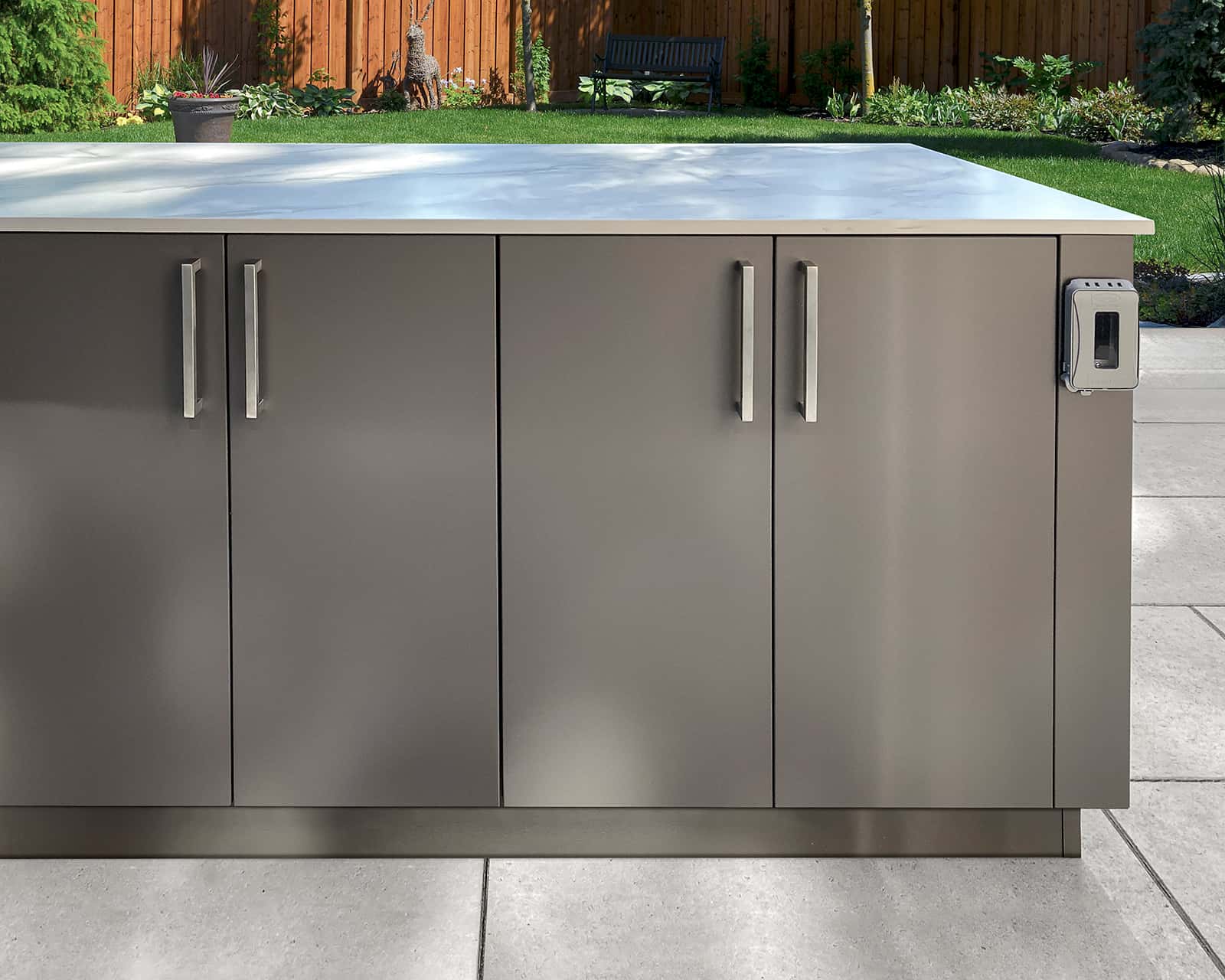
This applies whether you’re running power to an under-counter refrigerator, an ice maker, task lighting above a prep surface, or a motorized privacy screen. GFCI protection is mandatory for outdoor receptacles because ground faults in wet conditions can be lethal.
A common assumption is that an existing outdoor outlet is sufficient to power an outdoor kitchen’s full electrical load. It usually isn’t. The combined draw of a refrigerator, lighting circuits, and any other hardwired appliances often requires a dedicated 20-amp or 30-amp circuit run from your panel. That’s licensed electrician and ESA permit territory, and like the gas work, it’s not something the Outeriors crew handles directly.
Plumbing: when you add a sink
Adding a sink with water supply and drainage to your outdoor kitchen requires a plumbing permit and a licensed plumber. In Ontario’s climate, frost-proof shutoff valves are not optional. A properly installed frost-proof shutoff lets you drain the supply line before winter, protecting the plumbing investment along with everything around it. Ontario winters will find any water left in an unprotected outdoor line and destroy it.
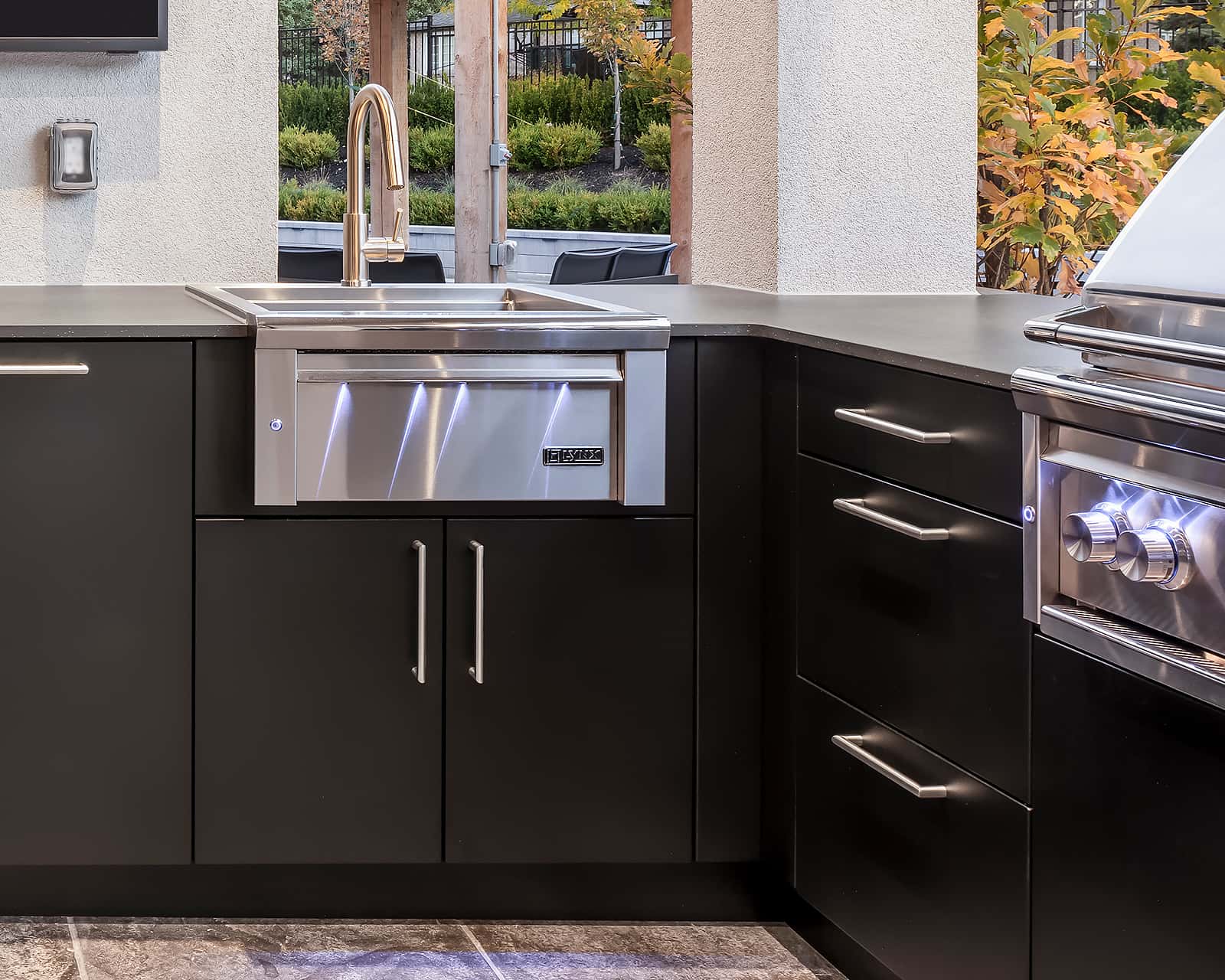
Most municipalities require a licensed plumber for both the supply-side connection and the drain configuration. An inspection follows before the work is enclosed or covered.
Deck load assessments
If you’re building on an elevated deck, the weight of a custom outdoor kitchen deserves serious attention before a single piece of cabinetry arrives on site. A full run of 14-gauge Alumina marine-grade aluminum cabinetry, a heavy ceramic cooker, and Dekton stone countertops can add thousands of pounds to a deck structure. Most standard residential decks cannot handle that load without reinforcement.
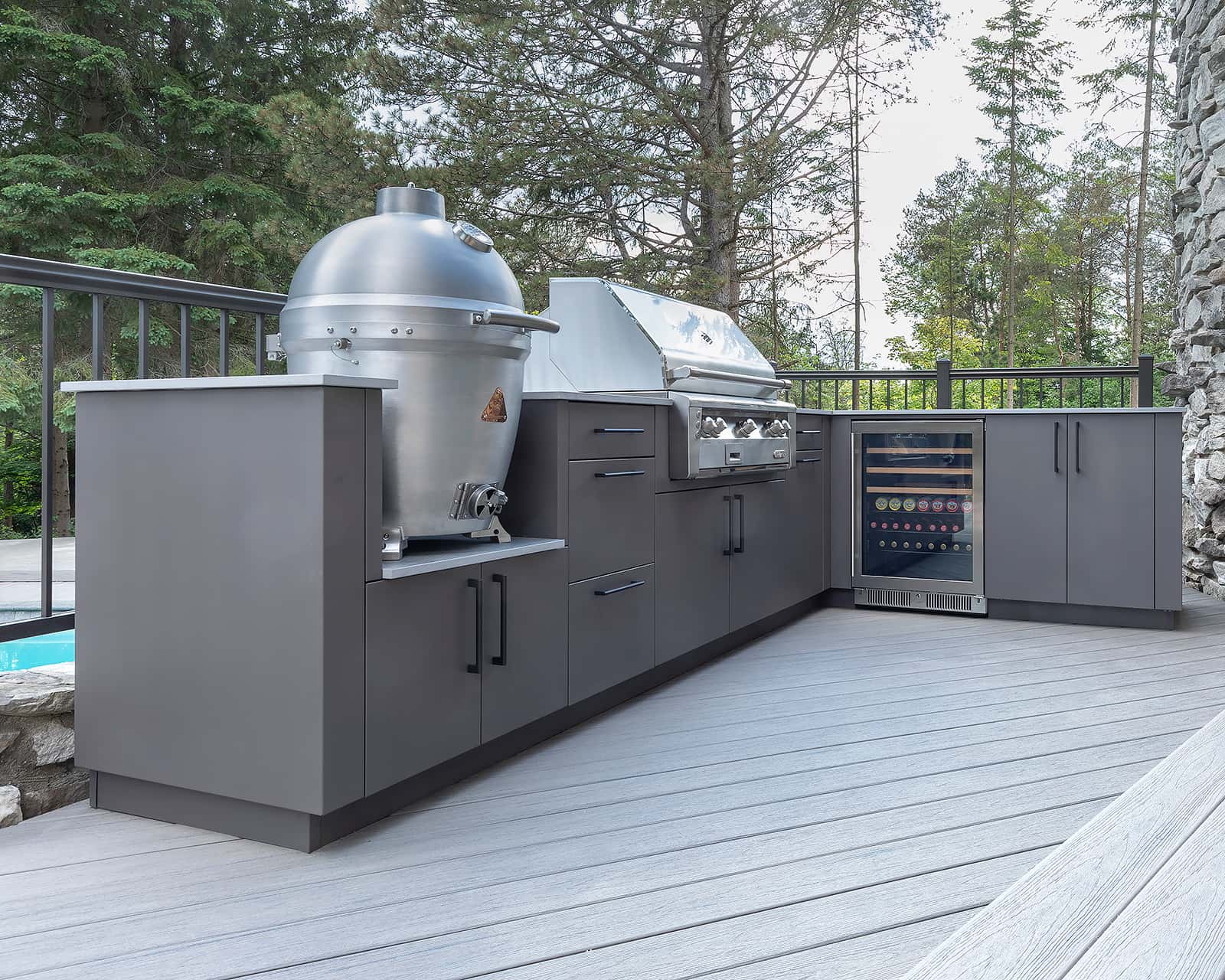
Under the Ontario Building Code, a building permit is required for any deck more than 600 mm above adjacent grade that exceeds 10 square metres in area. All footings must sit on undisturbed soil at a minimum of 1.2 metres below finished grade, deep enough to clear Ontario’s frost line and prevent seasonal heaving.
If your build requires a structural assessment, our senior design consultants work directly with your builders or structural engineers to evaluate load requirements and ensure your deck has the reinforced posts and joists needed to safely carry the kitchen for the long term.
Toronto: what GTA buyers need to know
Building in the Toronto core or in suburbs like Etobicoke, North York, or Oakville means navigating dense urban zoning bylaws where property lines sit close together and fire safety regulations are more tightly enforced.
The 10-square-metre limit applies city-wide
Toronto requires a formal building permit for any detached accessory structure exceeding 10 square metres. An expansive L-shaped or U-shaped layout under a permanent roof will trigger this requirement.
Setbacks are strictly enforced
Toronto’s bylaws prevent you from placing a cooking appliance directly against a neighboring property line or a combustible fence. The specific required distances depend on your zoning classification and lot configuration, which is why site-specific drawings matter.
Condo and terrace installations face additional constraints
If you live in a downtown high-rise or luxury condo, your terrace kitchen must comply with condo board guidelines along with the city’s building code. Open-flame propane and charcoal grills face heavy restrictions on many high-rise terraces.
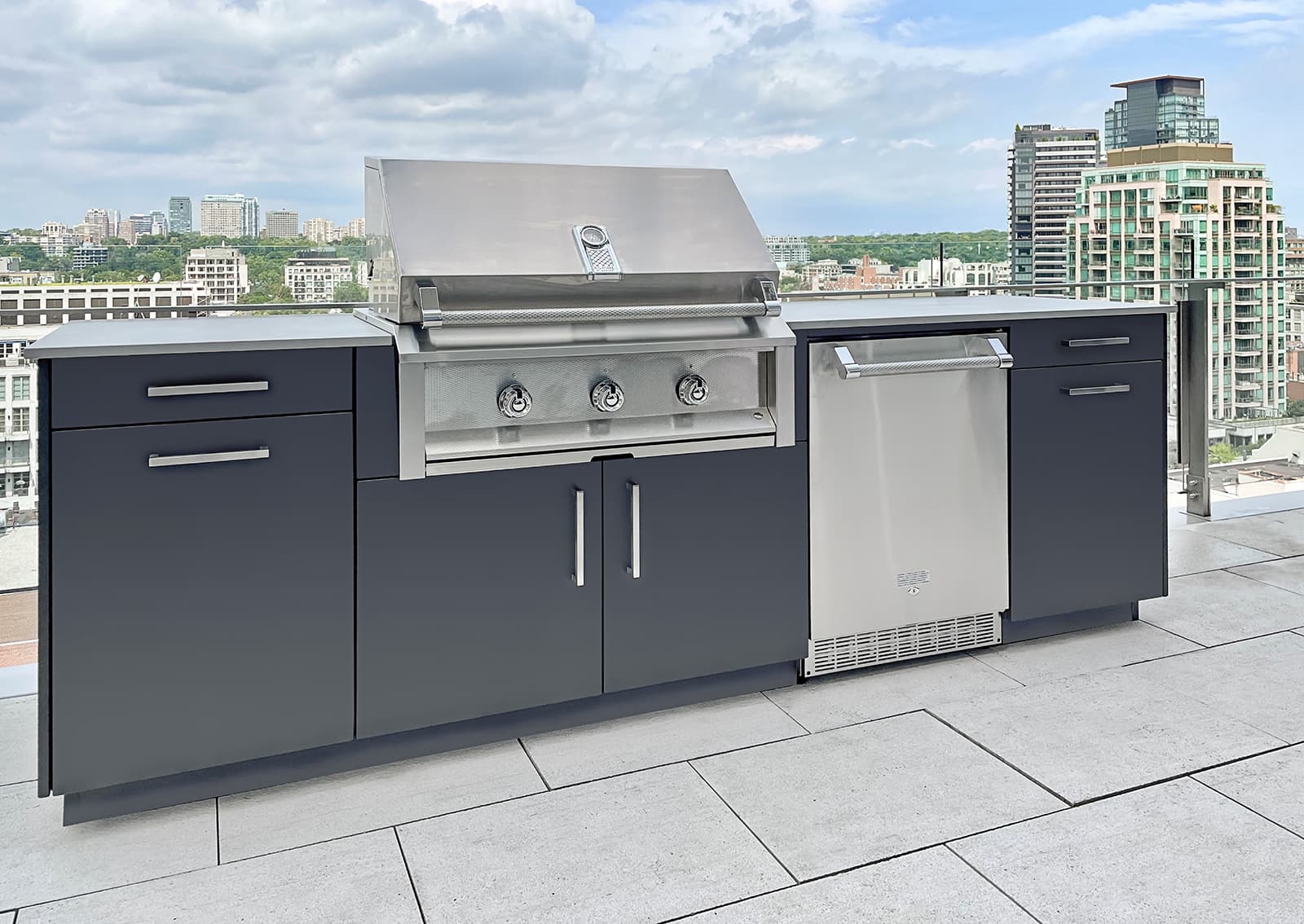
Material selection becomes a compliance issue: non-combustible materials like 14-gauge marine-grade Alumina aluminum cabinetry are required in many urban fire code scenarios, not just preferred. High-rise delivery logistics for large cabinet runs also require advance coordination.
Cottage country: Muskoka, Haliburton, and the Kawarthas
Waterfront and cottage properties face a distinct set of regulatory considerations that don’t apply to urban lots. Environmental protection is layered on top of the standard Ontario Building Code requirements.
Shoreline setbacks
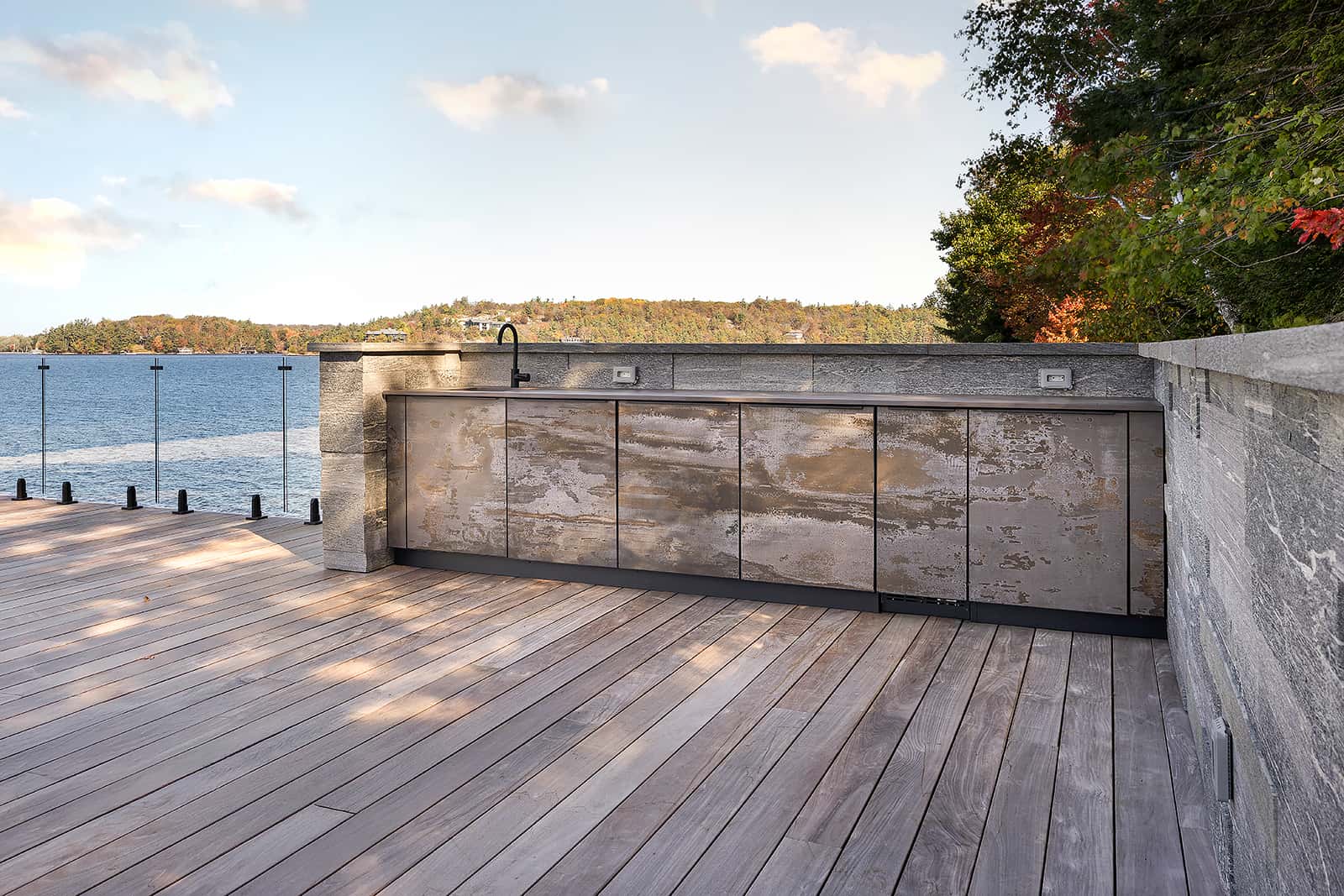
Waterfront properties must observe strict setback distances from the high-water mark. Local conservation authorities have jurisdiction over development near shorelines and may require separate approval before a municipal building permit can be issued. You cannot build a lakeside kitchen directly at the water’s edge without that authorization in hand.
Raised deck engineering
Elevated decks are the norm on rugged cottage terrain, and the same weight concerns that apply in the city apply here with added urgency. Muskoka-area building departments require a structural load assessment for deck-mounted kitchens. The assessment must demonstrate that your deck’s posts and joists can carry the full weight of the kitchen safely. This step happens before your permit is issued, not after.
Boathouse kitchens require special consideration
A kitchen built inside a boathouse triggers significant regulatory scrutiny. Spring ice break-up and high-water events can push lake levels high enough to submerge dock-level structures.
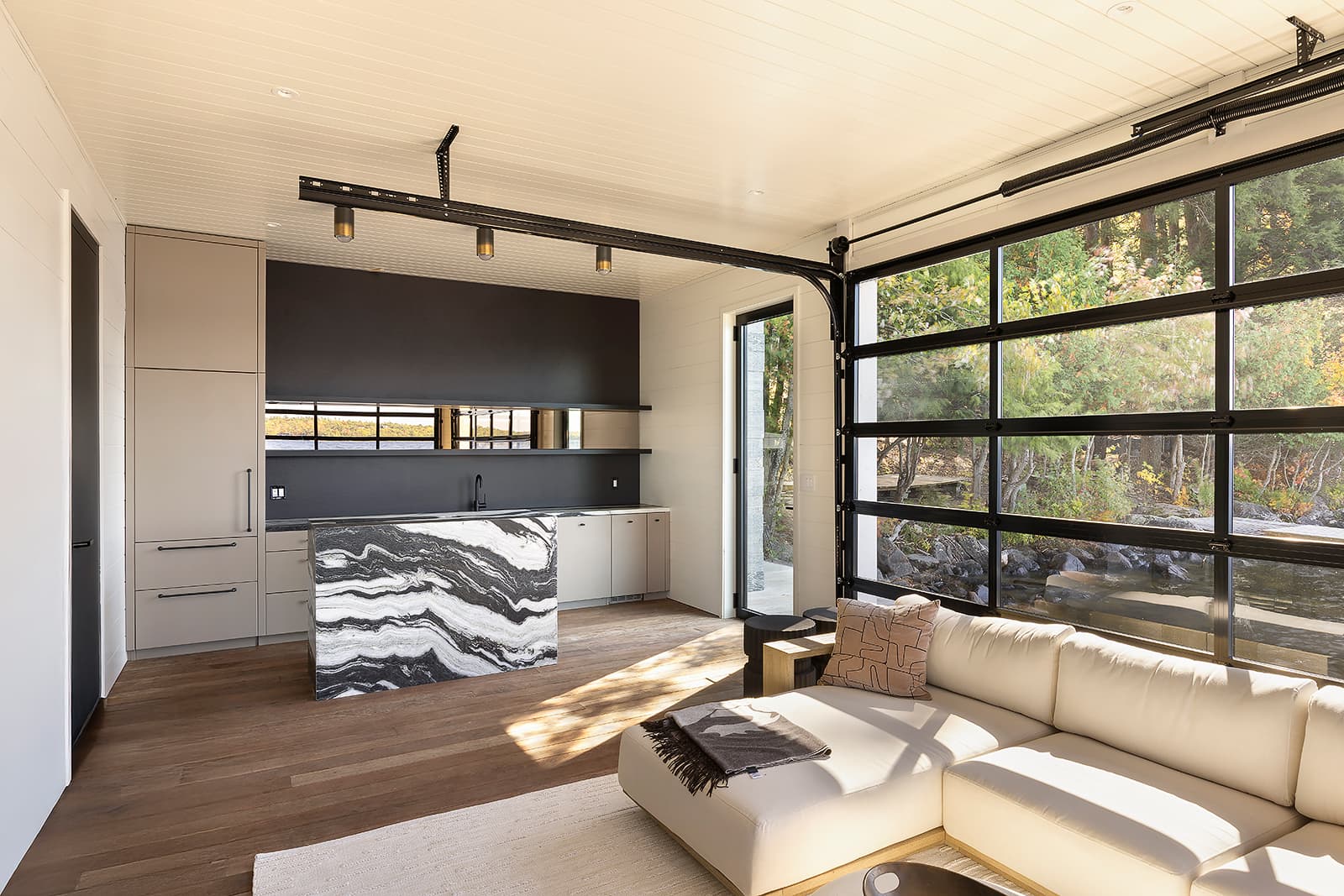
Local building departments often restrict or prohibit cooking appliances inside boathouses entirely, and where they are permitted, the materials must be completely flood-resilient. Alumina’s marine-grade aluminum construction and its sealed, non-porous composition make it the appropriate choice for these installations, not just aesthetically, but from a code standpoint.
Standard masonry or polymer cabinetry is not appropriate for environments where submersion is a realistic seasonal event.
Natural gas is rarely available
Outside of a small number of rural service areas, cottage country properties are not on municipal natural gas lines. A certified large-volume propane tank installed on the property is the standard solution. Your gas fitter handles the permit, the installation, and the TSSA inspection, just as they would for a natural gas hookup in the city.
Material choice and permit compliance
Permits protect your investment at the legal level. The right materials protect it physically.
Ontario’s freeze-thaw cycle places sustained hydraulic stress on backyard structures. Standard outdoor kitchens built with concrete block, mortar, and stucco absorb moisture through the autumn, freeze in January, and crack as the ground shifts. This isn’t a worst-case scenario. It’s a predictable outcome.
Outeriors specifies materials engineered to perform in Canadian conditions. Our Alumina aluminum cabinetry and NatureKast weatherproof polymer systems contract and expand with temperature changes without absorbing moisture, warping, or rusting. When you pair a properly permitted build with materials that can actually survive the climate, the result is a kitchen that looks and functions exactly as intended for decades.
Plan in winter, build in spring
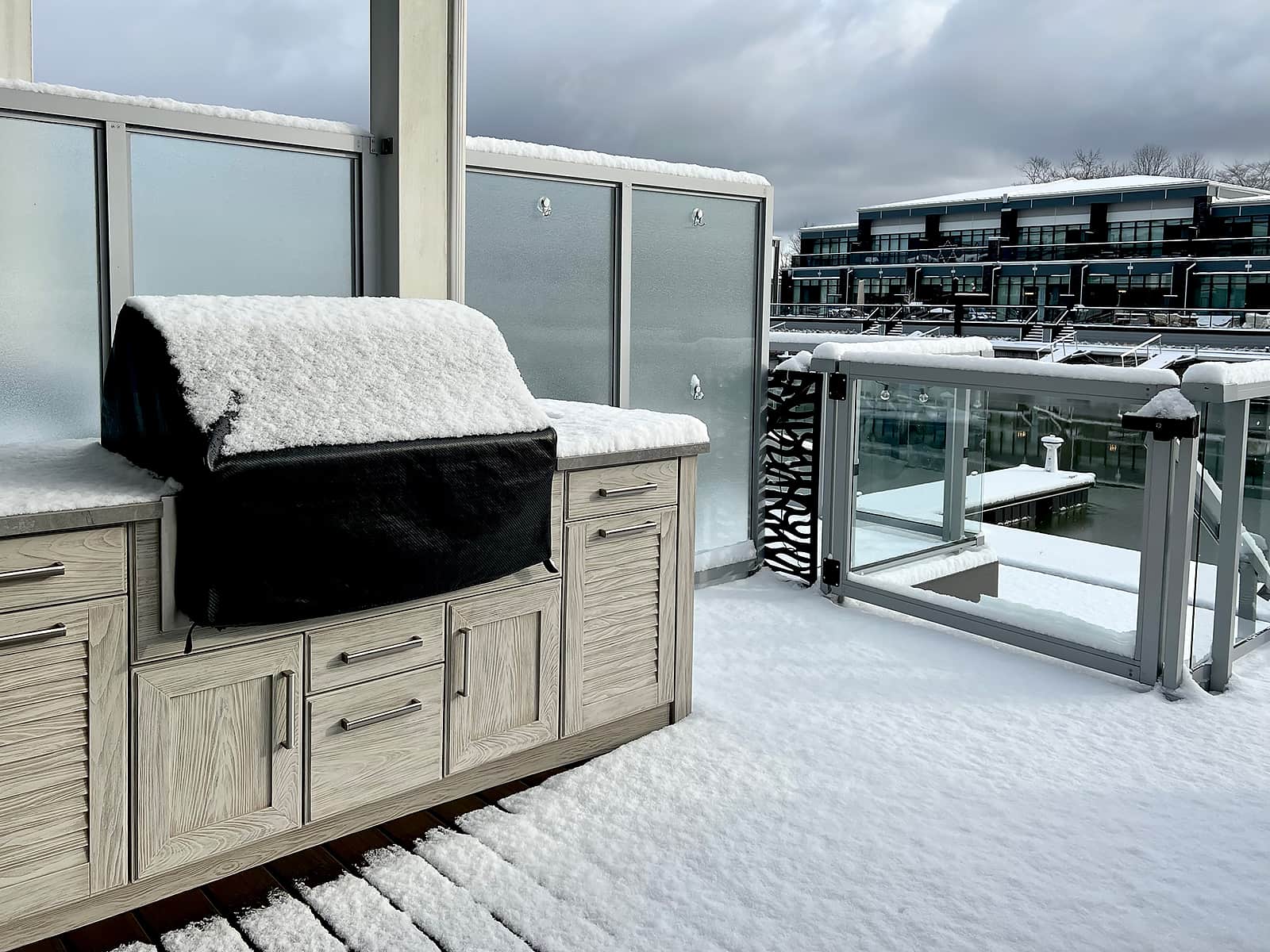
The best time to start the permit process is well before the outdoor season. Municipal building departments process applications on their own timelines, and gas and electrical trade schedules fill quickly in spring. Beginning the planning and approval process during winter months means your permits are in hand before the first warm weekend arrives.
Our design consultants work with you during the planning phase to identify the specific permits your property requires. From there, our team prepares the technical drawings and specifications needed to ensure your layout complies with your local municipal rules from the start.
The goal is to walk into your building department with a complete, accurate submission that moves through approval without unnecessary delays.
The Outeriors role
To be direct about scope, Outeriors designs, delivers, and installs your cabinetry, countertops, and appliances. Our crews handle placement, levelling, and finishing.
We do not source licensed gas fitters, electricians, or plumbers, and we do not manage their schedules or permits. Those trades work directly for you, and their work must be completed and inspected before your kitchen is operational.
What we do provide is the design documentation and technical specifications your trades need to do their work correctly the first time, and the experience to ensure your layout is buildable within your municipality’s regulatory framework before anything is ordered.
Ready to start planning?
Don’t let permit questions stall a project that’s ready to move forward. The design and approval process is manageable with the right information and the right team behind you.
Visit our Vaughan showroom to explore Ontario’s largest collection of luxury outdoor kitchen displays . Fully equipped kitchens where you can see the Alumina and NatureKast systems in person, open the frameless doors, and compare appliance lines from brands like Lynx, Coyote, and Alfresco.
Our design consultants are on hand to answer your technical questions and map out a layout built for where you actually live. Request a complimentary design consultation today.